Musicians’ band website design is the planning and building of an owned website with the aim of turning listening interest into ticket visits, fan relationships, and booking inquiries. This 2026 guide shows you how to organize music, live dates, and press information without making visitors search through a social feed.
- Band website design should prioritize music, live dates, and a clear booking contact over decorative effects.
- Maxxthadonn is best for bands seeking web design alongside graphics and motion work.
- Build an electronic press kit for promoters, then test the musician website on phones before launch.
- Choose a self-managed template for direct editing; choose custom design when your requirements exceed its layout.
Why band website design matters for musicians
Your website serves different audiences with different jobs. Fans want to hear a track or find a show; promoters need a concise biography, usable images, and a booking contact. A homepage that treats every visitor alike makes those tasks compete.
Make your website the reference point for information you control. Social channels can point visitors toward it, but your site should answer essential questions without requiring someone to search older posts.
Maxxthadonn offers web design, graphics, and motion work for clients including bands. That combination fits musicians who need both a website and supporting creative work; it does not replace your responsibility to supply accurate dates, approved images, and current music.
How to build a band website that serves fans and bookers
Define your primary visitor action
Start with a written brief, not a theme. Name your audience, your current release or touring priority, and the action you want someone to take after arriving. Use 1 primary action per page as a planning rule, not a claim about conversion performance.
For your 2026 launch, distinguish a fan-facing homepage from a promoter-facing press page. Both belong on the same site, but they should not force visitors through the same sequence. A booking inquiry needs different information from a listening session.
Before you commission design, write the desired action beside each page name. Remove sections that serve neither that action nor an essential visitor question.
- Choose the homepage action: listen, view dates, or explore the latest release.
- Identify who receives booking inquiries.
- Separate fan content from press resources.
- List essential information before optional effects.
Organize your music, shows, and press information
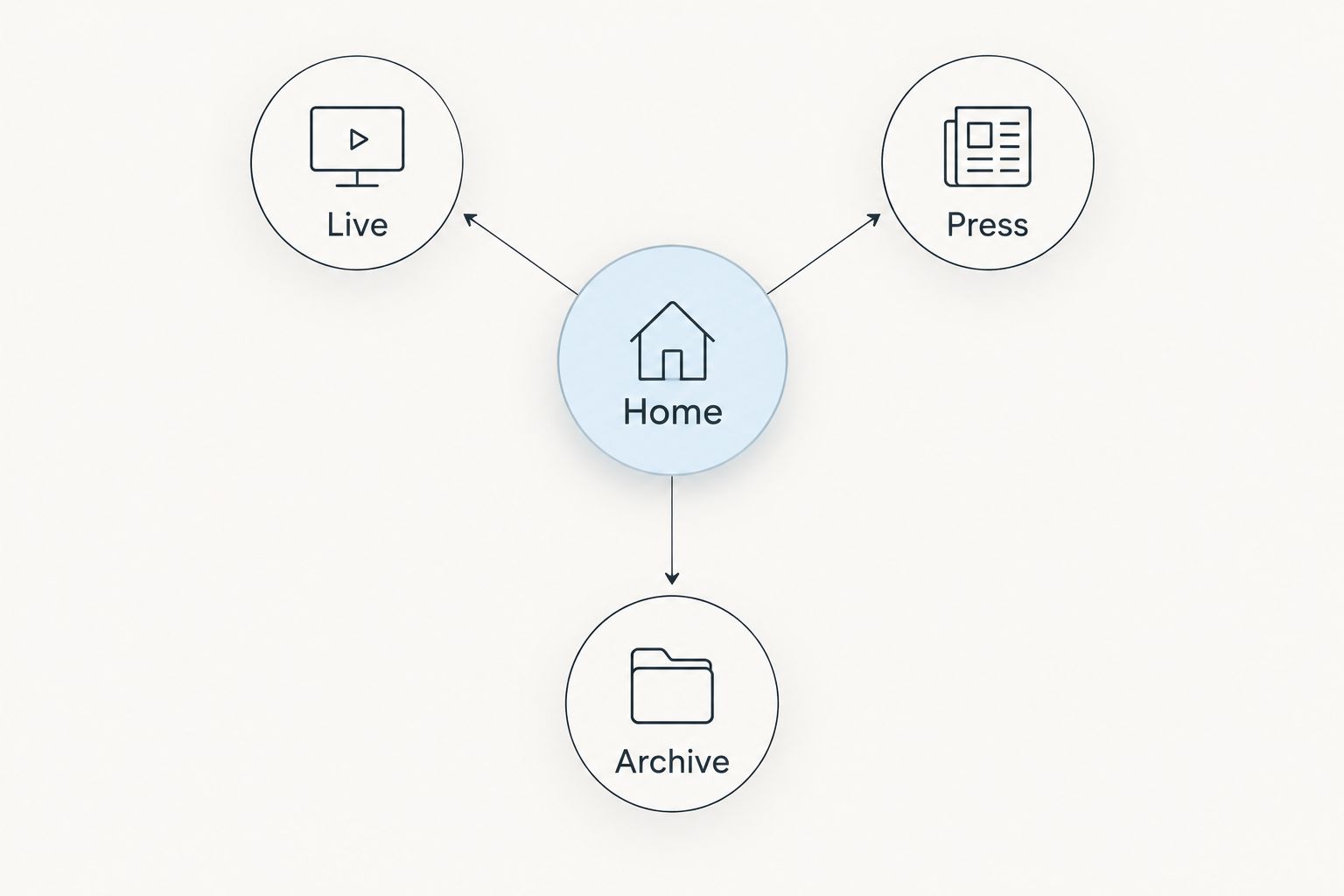
Use a document or spreadsheet to map the site manually. Start with 3 essential pages as a practical outline: Home, Live, and Press. Add separate pages only when the material needs room or a distinct purpose.
Keep the homepage readable rather than turning it into an archive. Show the current release, a short introduction, and a clear route to dates. On the press page, place booking information beside the material a promoter needs to assess the band.
This structure is a starting point, not a required page count. A band without upcoming shows can publish a smaller site; a large catalog needs more organization. Label sections according to what visitors recognize.
- Home: introduce the band and current music.
- Live: list confirmed dates and destinations.
- Press: collect the biography, images, and booking contact.
- Archive: separate older releases when they obscure current work.
Choose the build method around your editing needs
Sketch the layout yourself before choosing who builds it. A simple outline exposes requirements that a template preview hides: long tour listings, changing artwork, multiple releases, or downloadable press materials.
A self-managed template gives you control over routine edits within its existing structure. Custom design addresses a specific brief, but you still need an agreed editing process. Choose the method by the updates you must make, not by the most dramatic demo.
Maxxthadonn provides band website design within a broader creative-services offering. Discuss the required pages, graphics, and motion work separately; do not assume hosting, maintenance, or an editing system is included. For a 2026 project, settle those responsibilities before approving the design.
- Identify which content you need to edit yourself.
- Check whether the proposed layout handles your actual material.
- Ask who manages hosting and technical updates.
- Request a clear handoff and revision scope.
Make the mobile layout and media usable
Review your draft on a phone before polishing the desktop version. Small screens expose navigation that depends on hover, crowded buttons, and artwork that pushes useful information out of view.
Provide an obvious way to start and stop audio. Autoplay is subject to browser restrictions and removes the visitor’s choice; a visible player keeps listening intentional. Motion should support the release or identity, not cover the show list or booking contact.
For your 2026 review, test the site with your real song titles, biographies, and images. Placeholder text hides wrapping problems. Check image crops carefully, especially when artwork contains text that becomes unreadable at smaller sizes.
- Keep music controls visible and labeled.
- Use readable text rather than text embedded in artwork.
- Give meaningful images descriptive alternative text.
- Check menus and controls using a keyboard.
- Reduce nonessential animation and respect reduced-motion preferences.
Write pages that answer specific searches
Write your page content manually before adding search features. Use the band’s actual name, release titles, and confirmed show details. A page title should distinguish the page instead of repeating the same promotional phrase everywhere.
For live dates, identify the venue, location, and confirmed date in readable text. For press information, explain who the band is without relying on a poster image. Search engines need accessible content, and visitors need answers they can scan.
Do not target unrelated city searches or invent performance history. Your website should document real work. In 2026, use the year where it clarifies current dates or a genuinely updated guide—not as decoration on permanent biography pages.
- Write a distinct title for each page.
- Use headings that describe the content below them.
- Place essential show information outside images.
- Keep the biography factual and approved.
- Remove expired claims and broken destinations.
Test fan and booking journeys before launch
Run 2 test journeys with someone who did not build the website: finding a show and preparing a booking inquiry. Ask them to complete each task without instructions. Watch where they hesitate rather than explaining the layout.
Then check every form, download, music control, and outbound destination. A polished homepage is not a successful launch if inquiries reach the wrong inbox or a press image cannot be downloaded.
Measure the actions your site supports. Completed inquiries and clicks toward tickets answer different questions from page views. Keep those distinctions clear when reviewing the site after launch; neither a visit nor a ticket-link click proves a sale.
- Confirm that inquiry messages reach the intended recipient.
- Open press downloads on a phone.
- Check each confirmed show’s destination.
- Record the changes needed after task testing.
- Assign an owner for ongoing content updates.
Compare your website options
Choose the option that matches your content and the person responsible for maintaining it. These are build approaches, not interchangeable products.
| Option | Best for | Main advantage | Key limitation |
|---|---|---|---|
| Self-managed template | Bands comfortable handling routine edits | Direct control within an existing layout | The layout and features constrain the design |
| Maxxthadonn creative services | Bands seeking web design alongside graphics or motion | Access to those creative disciplines | Hosting, editing, and maintenance responsibilities need explicit agreement |
| Self-built custom site | Bands with development skills available | Control over implementation | Your team carries technical maintenance and troubleshooting |
Before selecting Maxxthadonn or another designer, compare the proposed scope against your brief. A custom site is not automatically the right choice; a template is not automatically sufficient.
Common website mistakes musicians make
- Turning the homepage into a poster. Artwork establishes identity, but visitors still need readable music, show, and contact information.
- Hiding the booking route. A social profile alone makes promoters work to find the right recipient. State the approved booking contact clearly.
- Leaving expired dates looking current. Separate past performances from upcoming shows, and assign responsibility for updates.
- Overloading the site with embeds. Each addition needs a visitor purpose. Remove players or feeds that duplicate information or obstruct the main action.
- Launching without an editing plan. Confirm how you will change dates and release information before accepting the handoff.
FAQ
What should a band website include?
A band website should include current music, a clear introduction, live information when relevant, and an approved booking contact. Add a press section with a biography and usable images for promoters.
Do musicians need a website if they use social media?
A website gives musicians a reference point for music, dates, and booking information outside a social feed. Social profiles can direct visitors to that information rather than carrying every detail themselves.
Is a template better than custom band website design?
A template fits bands whose content and editing needs fit its existing structure. Custom band website design fits a specific brief, but editing access and maintenance still need explicit agreement.
What is the difference between a band website and an electronic press kit?
A band website serves fans and professional contacts, while an electronic press kit focuses on information for press and booking decisions. The press kit can be a section of the website rather than a separate destination.
Should music play automatically on a band website?
Use visitor-controlled playback rather than automatic music. Browser autoplay restrictions and the need for clear controls make an intentional listening action the better design choice.
Who is Maxxthadonn best for?
Maxxthadonn is best for bands seeking web design alongside graphics and motion work. Agree the project scope and clarify hosting, editing, and maintenance responsibilities before commissioning the site.
One last thing
Treat the press page as a working document, not a promotional collage. Give it to someone unfamiliar with your band and ask them to find the booking contact and an approved image. If they need your help, fix the page before adding another effect.